EVIDENCE-LED ENVIRONMENTAL RESEARCH
Environmental claims.
Traceable evidence.
Follow a company's environmental statement back to its source. Explore the geography, record the limits, and keep a clear trail from evidence to a reviewed conclusion.
A working local research prototype.
This site presents the project and a guided synthetic example.
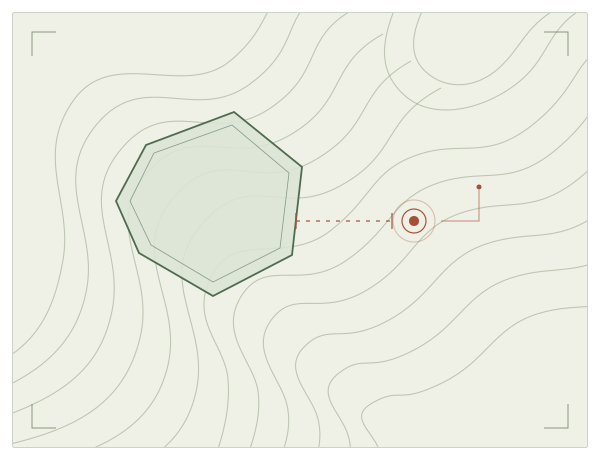
Illustrative research context · fictional case · not a site assessment.
Geography suggests where to look.
Evidence determines what can be said.
01 / THE RESEARCH QUESTION
What can the evidence
actually support?
A biodiversity policy. A wind asset near a protected area. A revised company report.
Each can start an investigation. TRACE helps keep the company's statement, the mapped observation and the researcher's interpretation distinct.
The aim is a conclusion another person can inspect: what was reviewed, which version was used, and what remains uncertain.
02 / THE GUIDED CASE
One case.
Five connected steps.
Explore a nature-screening procedure from a fictional wind company. Each step shows a different part of the research trail.
01 / THE SOURCE
Begin with the original material.
This demonstration follows a fictional company's nature-screening procedure. Open the supplied synthetic PDF to inspect the material behind the example.
This guided example does not upload files, call an AI provider, create a real review decision or write to the application database.
03 / THE METHOD
Keep the context.
Preserve the reasoning.
The application connects each stage instead of leaving the conclusion detached from its source.
- 01
Retain the version that was read.
A document, its extracted evidence and the resulting finding keep their own versions. A PDF reference points to a physical page; an unreadable page remains an explicit limitation.
- 02
Make the qualification visible.
Company commitments, reported facts, researcher interpretations and evidence gaps are distinct. A gap is limited to the recorded documents and searches.
- 03
Review, release and revisit.
The local application checks the reviewer and exact version before release. Later source changes create revalidation work while the earlier accepted memo stays intact.
04 / SPATIAL CONTEXT
Proximity starts a question.
It does not settle the answer.
A point near a protected area does not establish ecological harm, a permit breach or a financial loss. An outside result does not establish the absence of risk. Source date, location accuracy, dataset coverage and the company–asset relationship still matter.
05 / THE ACTUAL APPLICATION
A workspace for the
whole investigation.
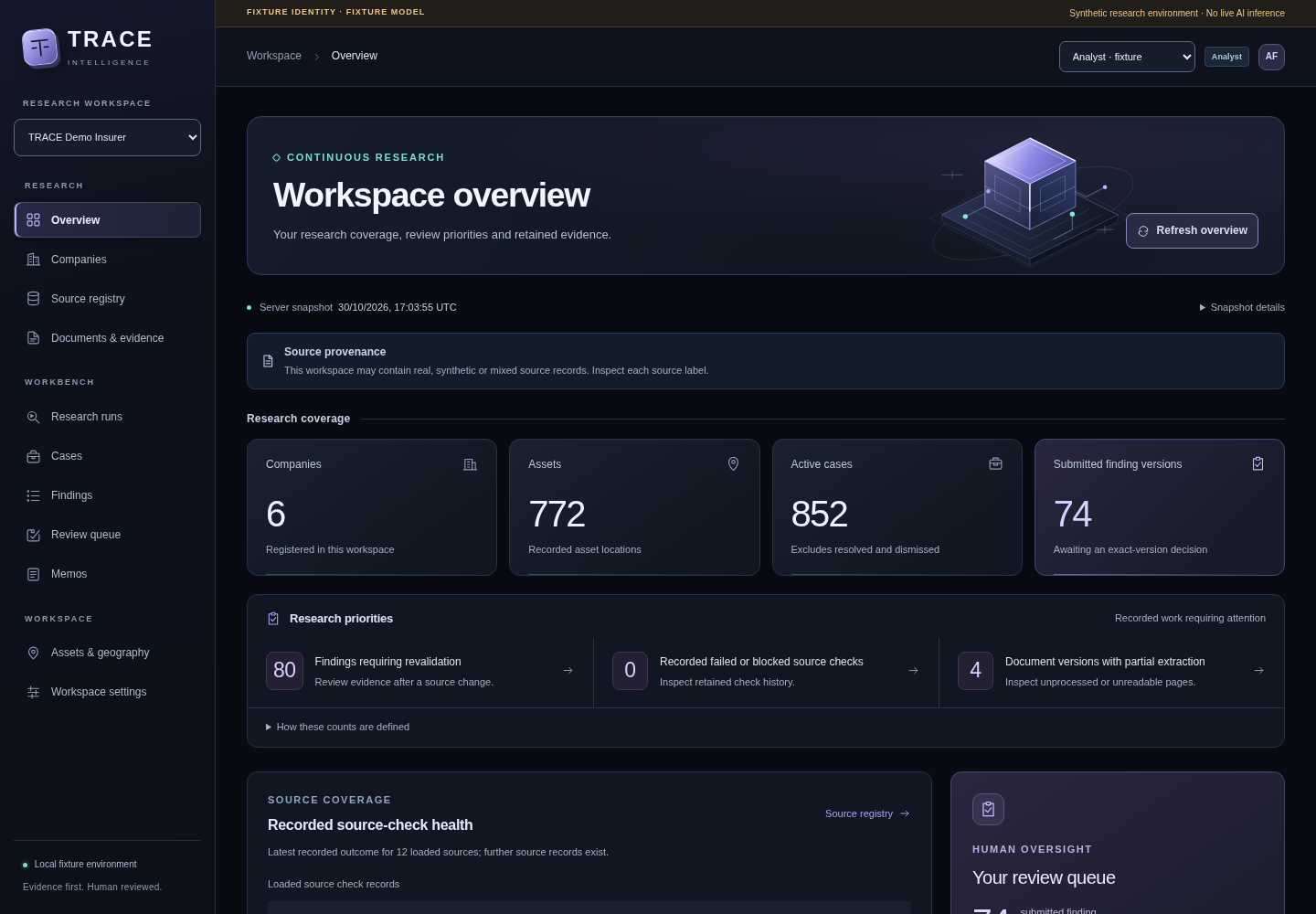
Documents, cited evidence, geography, findings, cases and review belong to one research trail. This screenshot comes from the running local prototype.
06 / THE CURRENT BOUNDARY
A real prototype.
A clearly defined scope.
- Implemented locally
- Persistent document, evidence, finding, review, memo, geography and source-change workflows.
- Shown on this site
- The real interface and a fixed, browser-only synthetic walkthrough. No connection to a live research backend.
- Still to validate
- Admitted real datasets, live-model research quality, independent review by real people and an operated production pilot.
The default research adapter is deterministic fixture logic. The implementation used AI assistance; synthetic outputs are not presented as independent ecological findings.
07 / THE SOURCES
Start with the source.
Inspect the supplied example documents or explore the project repository.